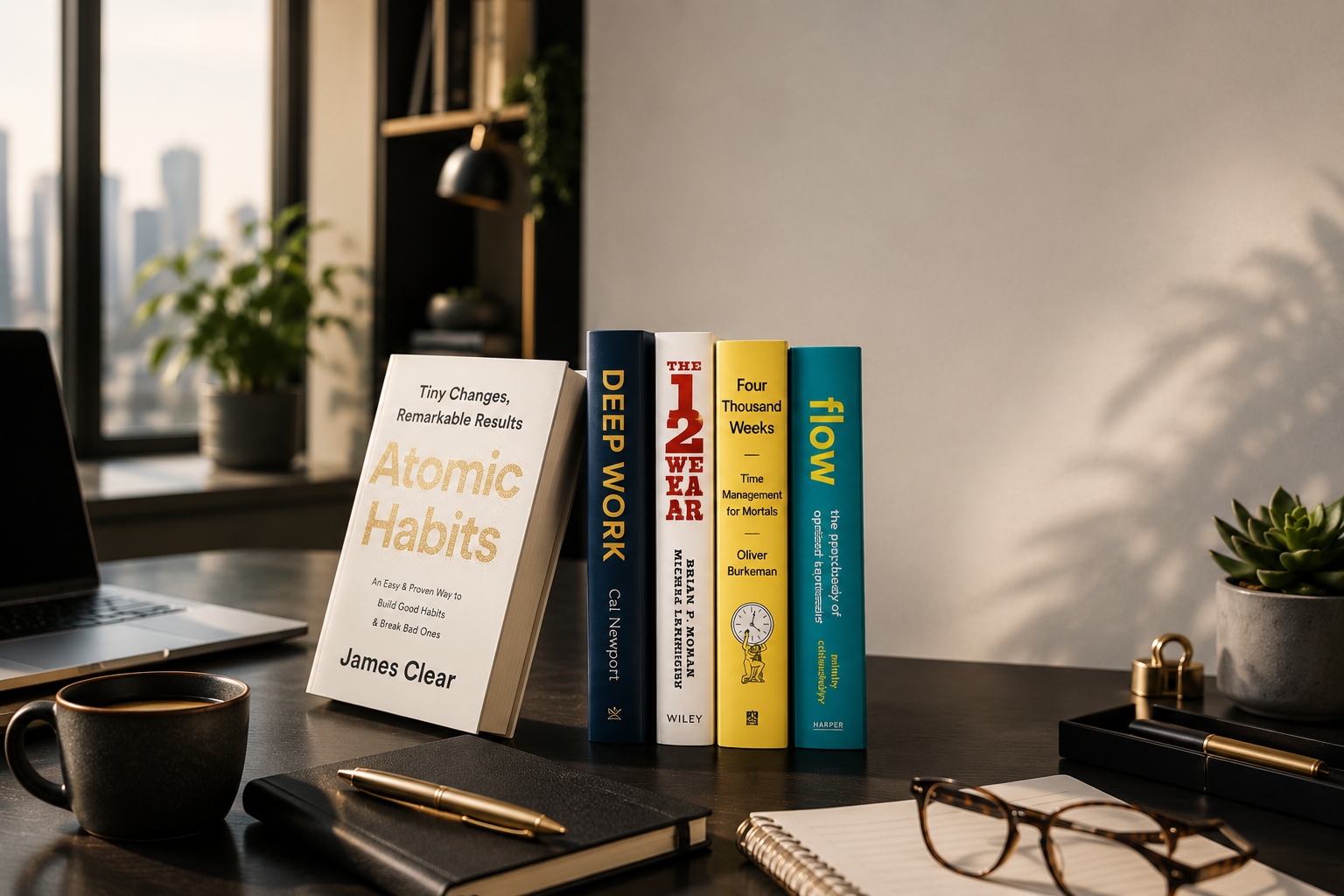
📋 Quick Summary: Best Productivity Books 2026
| # | Book | Best For |
|---|---|---|
| 1 | Atomic Habits | Building systems that stick |
| 2 | Deep Work | Focused, distraction-free performance |
| 3 | The ONE Thing | Cutting through overwhelm |
| 4 | Essentialism | Doing less, achieving more |
| 5 | Make Time | Reclaiming hours from the everyday chaos |
| 6 | Getting Things Done (GTD) | Building a trusted personal system |
| 7 | Eat That Frog | Beating procrastination fast |
| 8 | The 12 Week Year | Executing goals with urgency |
| 9 | Flow | Reaching peak performance states |
| 10 | Four Thousand Weeks | A philosophy reset for the overworked |
Here is a stat that should make you pause: over 20 million copies of Atomic Habits have been sold worldwide. Yet studies consistently show that only about 8% of people who buy a self-help or productivity book actually finish it — and an even smaller number implement anything from it.
That is not a reading problem. That is a curation and implementation problem.
You have probably bought books that sat on your nightstand for months. You have probably downloaded PDFs with every intention of reading them “this weekend.” And you have probably felt a quiet guilt every time you spotted them on your shelf. We have all been there.
This list is different. We are not going to give you 10 summaries and send you on your way. Every book on this list comes with one clear action you can take within 48 hours of reading it. No theory. No vague inspiration. Real, usable moves — tested by professionals in demanding careers across IT, consulting, banking, startups, and HR.
If you are an ambitious professional aged 22 to 40 who wants to grow your career but feels perpetually overwhelmed and distracted, bookmark this page. You are about to get the most structured reading direction you have ever had.
“The goal is not to read more books. The goal is to become a different person because of what you read.”
How We Picked These 10 Books (Our 4-Filter System)
There are thousands of productivity books in print. We did not want to hand you a recycled list. Every book you will read about below passed through four strict filters:
- Research-backed, not just opinion. The book’s core claims must be grounded in psychology, neuroscience, or behavioural economics — not just one person’s morning routine. We skipped popular books that were light on evidence.
- A specific system, not just inspiration. Motivation fades. Systems endure. Every book here teaches you a repeatable framework you can plug into your actual workday — not just a mindset shift.
- Relevant to the Indian professional context. The 12-hour workday, the pressure of family expectations, WhatsApp-driven distraction, and the hustle culture specific to Indian metros are real. Books that only work in a Silicon Valley garage with a four-hour workday were disqualified.
- Proven impact from real readers and expert citation. We looked at verified reviews, citations by career coaches and leadership educators, and long-term reader outcomes — not just launch-week bestseller rankings.
Being transparent about our process matters to us, because the internet is already full of “top 10 books” lists that are nothing more than Amazon affiliate grabs. This is not that.
The Foundation Layer (Books 1–5)
These five books deal with the most fundamental questions of professional productivity: how habits form, how attention works, what to prioritise, and how to protect your time.
Atomic Habits — James Clear
Best For: Anyone who has tried to build a good habit — and failed — more than three times.
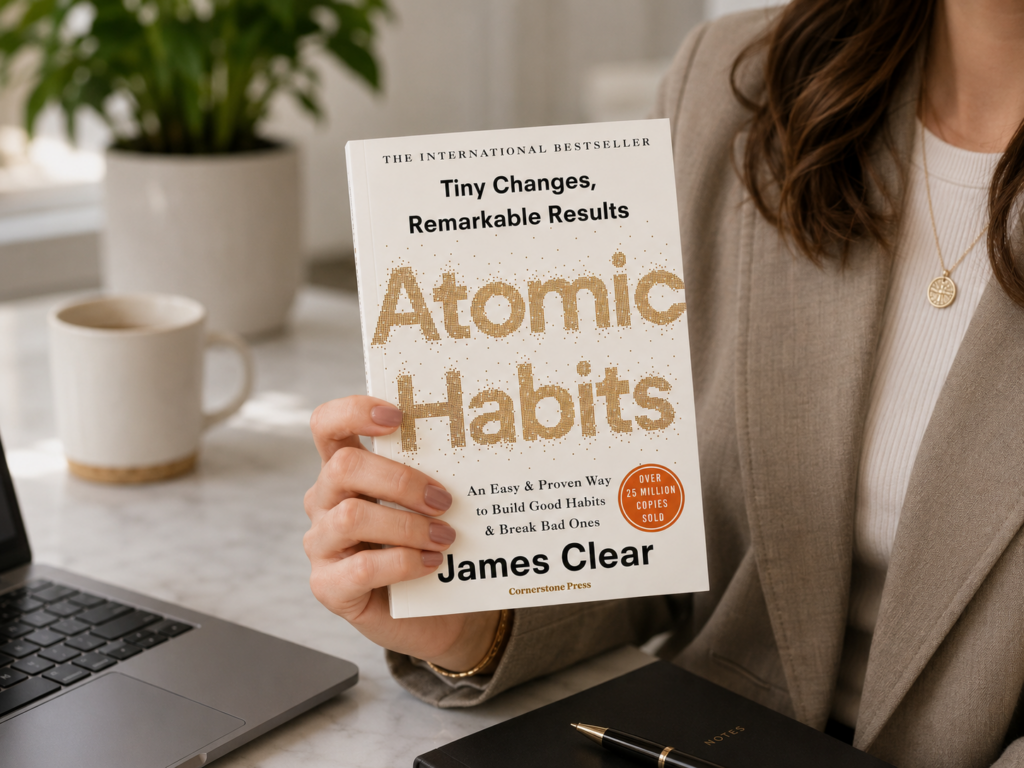
The Core Idea: You do not rise to the level of your goals. You fall to the level of your systems. Clear argues that a 1% improvement every day compounds into a 37x better version of yourself by year’s end — and shows you the exact mechanics of how habits form, persist, and break.
✅ One Thing To Do TODAY: Pick one habit you want to build. Write down the cue, craving, response, and reward for that habit using Clear’s four-step loop. Then identify the environment change you can make in your home or office by tonight that makes the habit easier to do tomorrow morning.
Why It Made Our List:
Atomic Habits is arguably the most practically applicable behaviour-change book of the last decade. Its strength is not novelty — habit loops were already known from Charles Duhigg’s work — but the implementation detail. The identity-based habits framework (“I am the kind of person who…”) is particularly powerful for Indian professionals who carry a strong sense of identity tied to family and career roles.
⚠️ Who Should Skip It: If you have already read this and built a solid habit tracking system, you will not find much new. Move directly to Deep Work instead.
Deep Work — Cal Newport
Best For: Professionals who do knowledge work but spend most of their day in reactive mode — meetings, email, Slack, and interruptions.
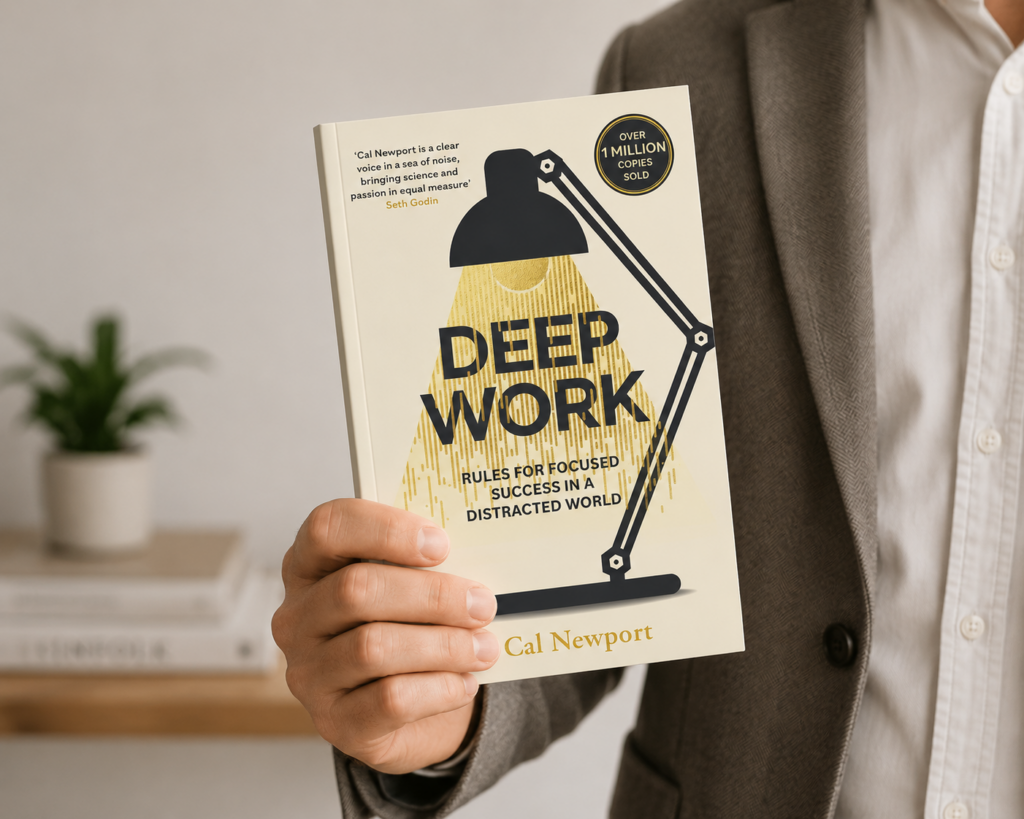
The Core Idea: The ability to focus without distraction on cognitively demanding tasks is becoming increasingly rare and increasingly valuable. Newport defines “deep work” as professional activity performed in a state of distraction-free concentration — and makes a compelling case that this is the single skill that will separate elite performers from everyone else in the 2020s.
✅ One Thing To Do TODAY: Block a 90-minute “Deep Work” slot in your calendar for tomorrow — before 11 AM. During that slot, close every tab except the one thing you are working on. No phone. No notifications. Treat it like a meeting you cannot cancel.
Why It Made Our List:
In a country where the average professional receives over 120 WhatsApp messages per day across personal and work groups, Newport’s framework is not a luxury — it is a survival skill. His four different scheduling philosophies (Monastic, Bimodal, Rhythmic, and Journalistic) allow professionals at every level of seniority to adapt the concept to their real constraints.
⚠️ Who Should Skip It: If your role is genuinely relationship-driven — sales, customer success, HR business partnering — where constant availability is part of the job description, the strict monastic approach will not apply. Still read Part 1 for the mindset shift.
BOOK 3 OF 10
The ONE Thing — Gary Keller & Jay Papasan
Best For: Professionals who are busy every day but feel like they are not making real progress on anything that matters.
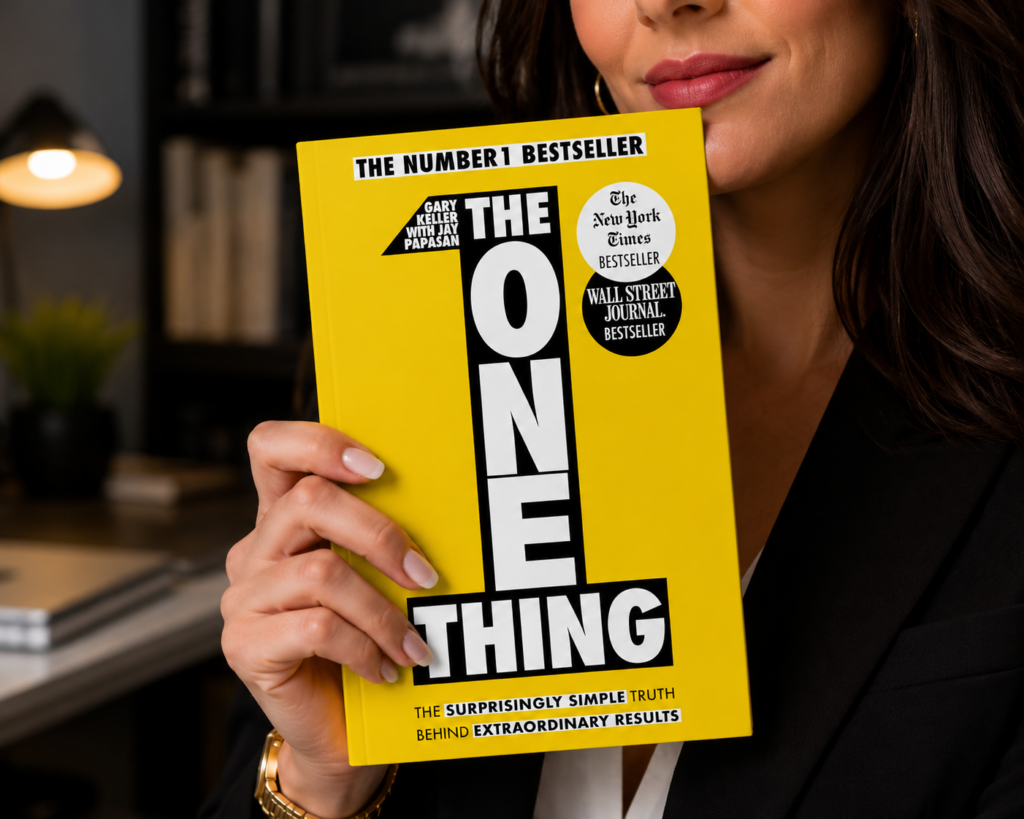
The Core Idea: Extraordinary results are determined by a narrow focus. At any given moment, there is one thing you can do such that by doing it, everything else becomes easier or unnecessary. Keller’s “Focusing Question” — “What’s the ONE thing I can do, such that by doing it, everything else will be easier or unnecessary?” — is deceptively simple and deeply clarifying.
✅ One Thing To Do TODAY: Ask yourself Keller’s Focusing Question for your current biggest professional goal. Write the answer in one sentence. Then schedule the first hour of tomorrow exclusively for that one thing — before you open email, attend standup, or answer any messages.
Why It Made Our List:
Most Indian professionals operate under what we call “multitasking pressure” — the expectation to be responsive, productive, available, and strategic all at once. This book is a direct antidote. The chapter on “The Domino Effect” — how one focused action topples a cascade of results — is worth the price of the book alone.
⚠️ Who Should Skip It: If you are a founder or senior leader managing genuinely diverse portfolios, the “one thing” framing can feel limiting. Pair it with Essentialism for a more nuanced approach.
BOOK 4 OF 10
Essentialism — Greg McKeown
Best For: Mid-career professionals who have said yes to too many projects, commitments, and responsibilities and now feel perpetually stretched thin.
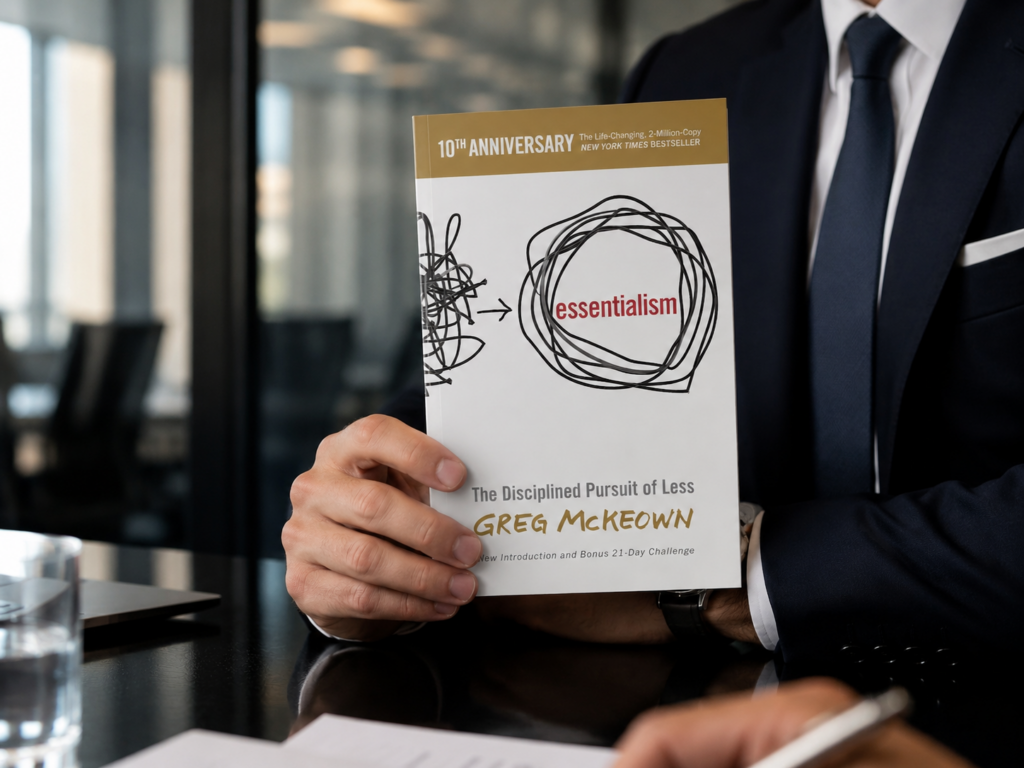
The Core Idea: Essentialism is the disciplined pursuit of less. Not laziness — but the rigorous practice of determining what is absolutely essential and then eliminating everything that is not. McKeown’s central thesis: if you do not prioritise your life, someone else will.
✅ One Thing To Do TODAY: List every project, task, and commitment you currently have on your plate — professional and personal. Circle the top three that genuinely move the needle on your most important goals. Everything else is a candidate for elimination, delegation, or deferral. Start by saying no to one thing this week.
Why It Made Our List:
In a culture where being “busy” is worn as a badge of honour — especially in Indian corporate environments — this book gives you the philosophical and practical permission to say no strategically. The chapter on how to decline gracefully without damaging relationships is something every people-pleasing professional needs to read twice.
⚠️ Who Should Skip It: Early-career professionals (0–2 years experience) should build breadth before narrowing. Read this after you have enough context to know what truly matters in your field.
BOOK 5 OF 10
Make Time — Jake Knapp & John Zeratsky
Best For: Anyone who ends the day feeling like they did a lot but accomplished nothing meaningful.
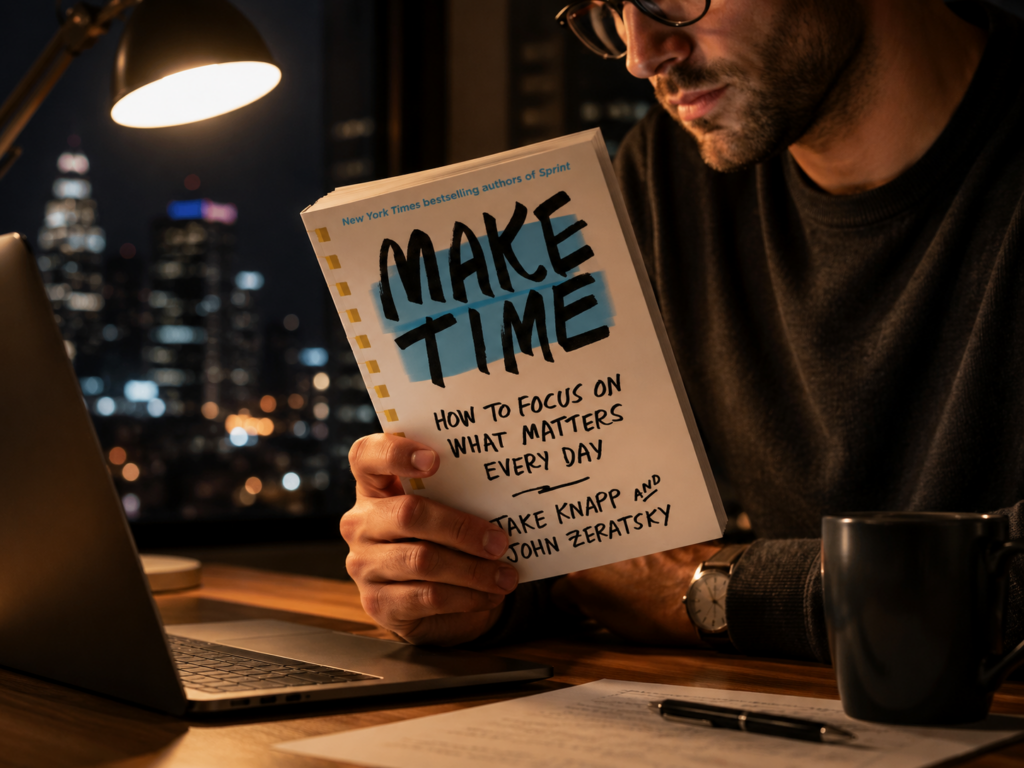
The Core Idea: Built by two former Google designers, Make Time introduces a four-step daily framework: Highlight (choose one priority for the day), Laser (beat the Infinity Pools of distraction like social media and email), Energise (protect your physical and mental energy), and Reflect (track what worked). It is deliberately practical and experiment-friendly.
✅ One Thing To Do TODAY: Before you sleep tonight, choose your “Highlight” for tomorrow — one task or activity that will make the day feel successful regardless of everything else. Write it down and put it where you will see it first thing in the morning.
Why It Made Our List:
Unlike most productivity books, Make Time was designed for people who cannot reinvent their entire schedule. The tactics are modular — you can test one strategy a week without overhauling your life. For professionals in demanding corporate roles or Indian startup environments where your time is rarely your own, this flexibility is invaluable.
⚠️ Who Should Skip It: If you are already running a structured daily system that works, this might feel repetitive. It is best for professionals starting from scratch or feeling aimless about their daily structure.
— Halfway There —
Books 6–10: The Advanced Layer
You have the foundation. Now these five books build the architecture around it — a complete personal system, a mindset for execution, a framework for peak performance, and finally, a radical rethinking of what productivity even means.
BOOK 6 OF 10
Getting Things Done (GTD) — David Allen
Best For: Professionals whose head is cluttered with open loops — tasks, ideas, commitments, and reminders — that they are mentally tracking instead of systematically managing.
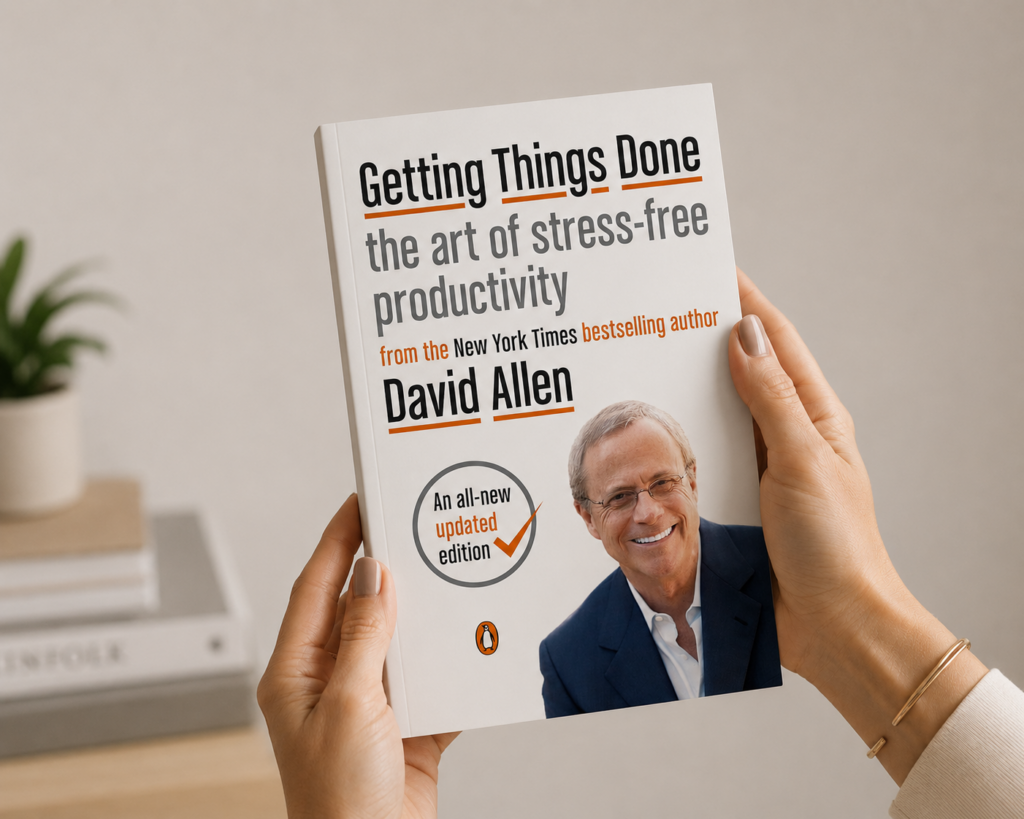
The Core Idea: Your mind is for having ideas, not holding them. GTD is a complete methodology for capturing everything that has your attention, clarifying what each item means, organising the results, reviewing regularly, and engaging with your work from a place of clarity and control. Allen calls this “mind like water” — a state of relaxed readiness.
✅ One Thing To Do TODAY: Do a “Brain Dump.” Take a blank page and write down every single open loop in your mind — every pending task, unfinished project, nagging worry, commitment you made, and idea you want to act on. Do not organise yet. Just empty your head onto paper. The relief alone is worth it.
Why It Made Our List:
GTD is the gold standard of personal organisation systems. It has been in print since 2001 and remains the go-to reference for high-performing professionals in management consulting, technology, and finance globally. The Indian edition’s principles apply directly to the chaotic, multi-stakeholder environments most professionals here navigate daily.
⚠️ Who Should Skip It: If you are looking for a quick motivational read, this is not it. GTD is a reference manual. Commit to building the system over 3–4 weeks or do not start. Half-implementing it creates more confusion than clarity.
BOOK 7 OF 10
Eat That Frog — Brian Tracy
Best For: Chronic procrastinators who know exactly what they should be doing and still find themselves scrolling Instagram instead.
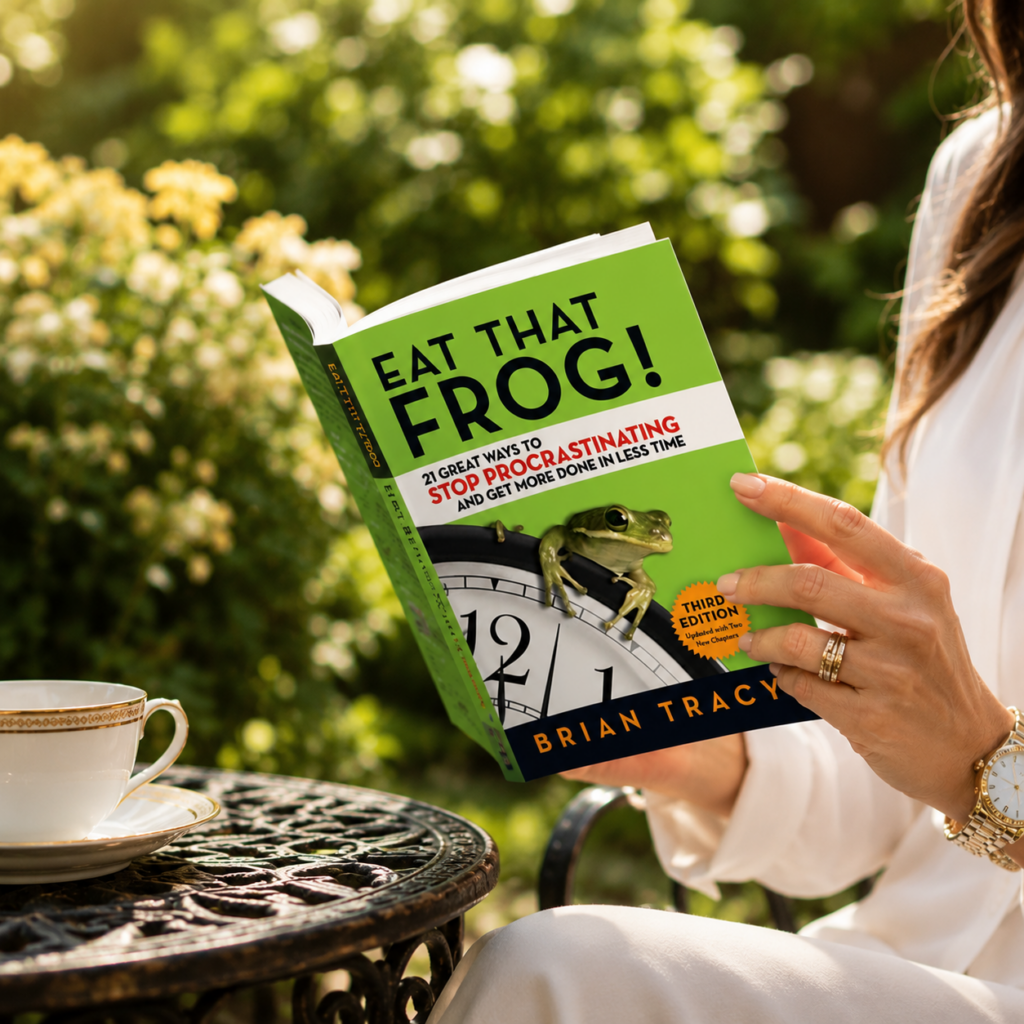
The Core Idea: Mark Twain said that if you eat a live frog first thing in the morning, nothing worse can happen to you for the rest of the day. Tracy uses this metaphor to argue that your “frog” is your most important task — the one you are most likely to procrastinate on — and the entire discipline of productivity rests on doing it first, before anything else.
✅ One Thing To Do TODAY: Identify your frog for tomorrow. It is the task you have been avoiding the longest that would make the biggest positive impact if you completed it. Set an alarm for 30 minutes earlier than usual tomorrow and start with nothing else.
Why It Made Our List:
At just 128 pages, this is the most efficient book on this list. It is particularly useful for professionals in high-volume environments — banking operations, IT delivery, consulting projects — where the sheer number of tasks creates a paralysis that disguises itself as busyness. Tracy’s 21 techniques are specific, numbered, and instantly usable.
⚠️ Who Should Skip It: Senior leaders and strategists may find the book too tactical. The “eat the frog” principle is powerful, but it assumes you know which frog to eat. Pair it with Essentialism if priority-setting is your real challenge.
BOOK 8 OF 10
The 12 Week Year — Brian Moran & Michael Lennington
Best For: Professionals who set annual goals in January and lose momentum by March — every single year.
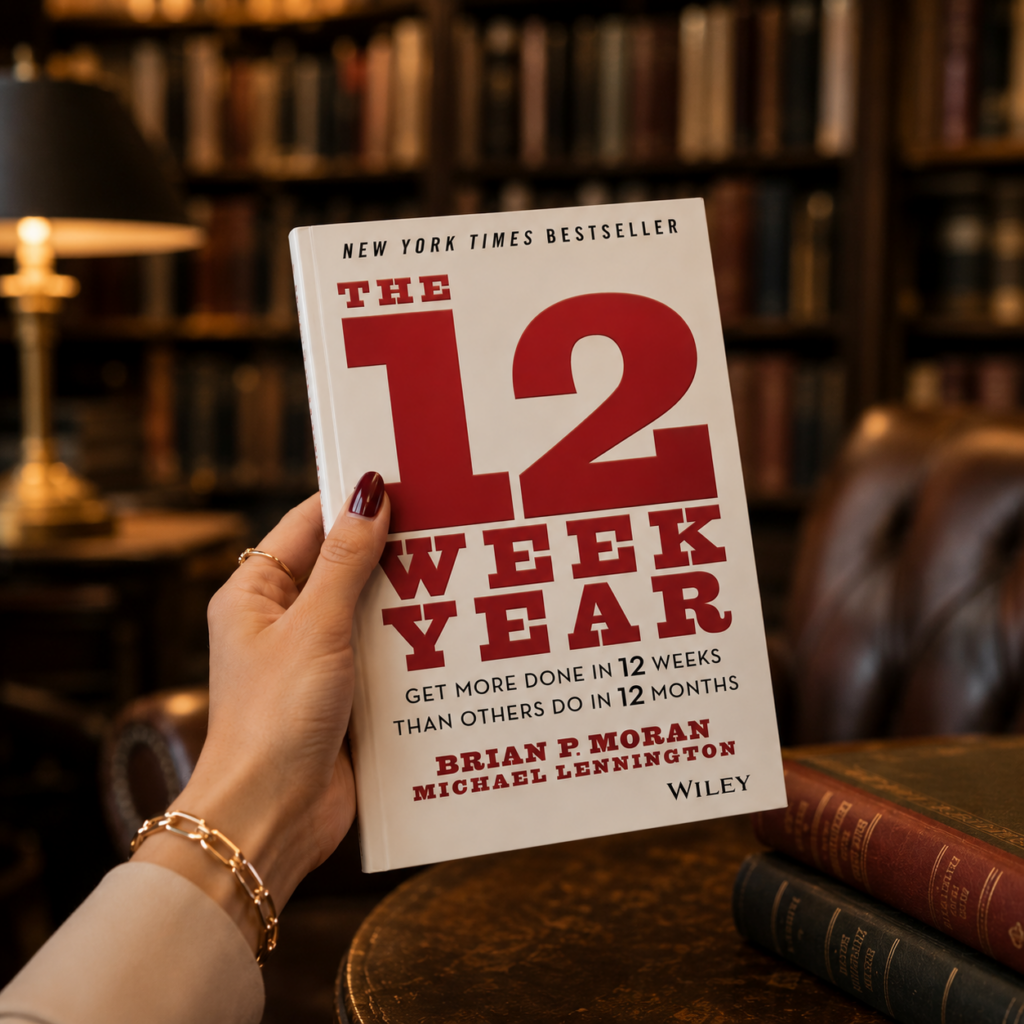
The Core Idea: A year is too long. It creates false comfort — there is always “more time later.” The 12 Week Year redefines your year as 12 weeks. Each quarter becomes a full year with its own planning, execution, and review cycle. The urgency this creates is not artificial stress — it is the same urgency that makes the last month of any deadline remarkably productive.
✅ One Thing To Do TODAY: Write down your top three goals for the next 12 weeks — not the next 12 months. Make each goal specific and measurable. Then identify one action for each goal that you will complete by Friday. That is your 12 Week Year starting this week.
Why It Made Our List:
Annual appraisal cycles in Indian corporate environments have trained professionals to think in yearly timescales. The result is that most people do their most important work in the last 6 weeks before a performance review. This book gives you a system to operate at that intensity all year long — without the burnout, because the built-in reflection periods are equally rigorous.
⚠️ Who Should Skip It: If your work is primarily creative or research-oriented — where timelines are genuinely unpredictable — the structured urgency of this framework can feel counterproductive. Adapt it loosely rather than following it rigidly.
BOOK 9 OF 10
Flow: The Psychology of Optimal Experience — Mihaly Csikszentmihalyi
Best For: Professionals who have experienced moments of complete absorption in their work and want to understand how to access that state deliberately.
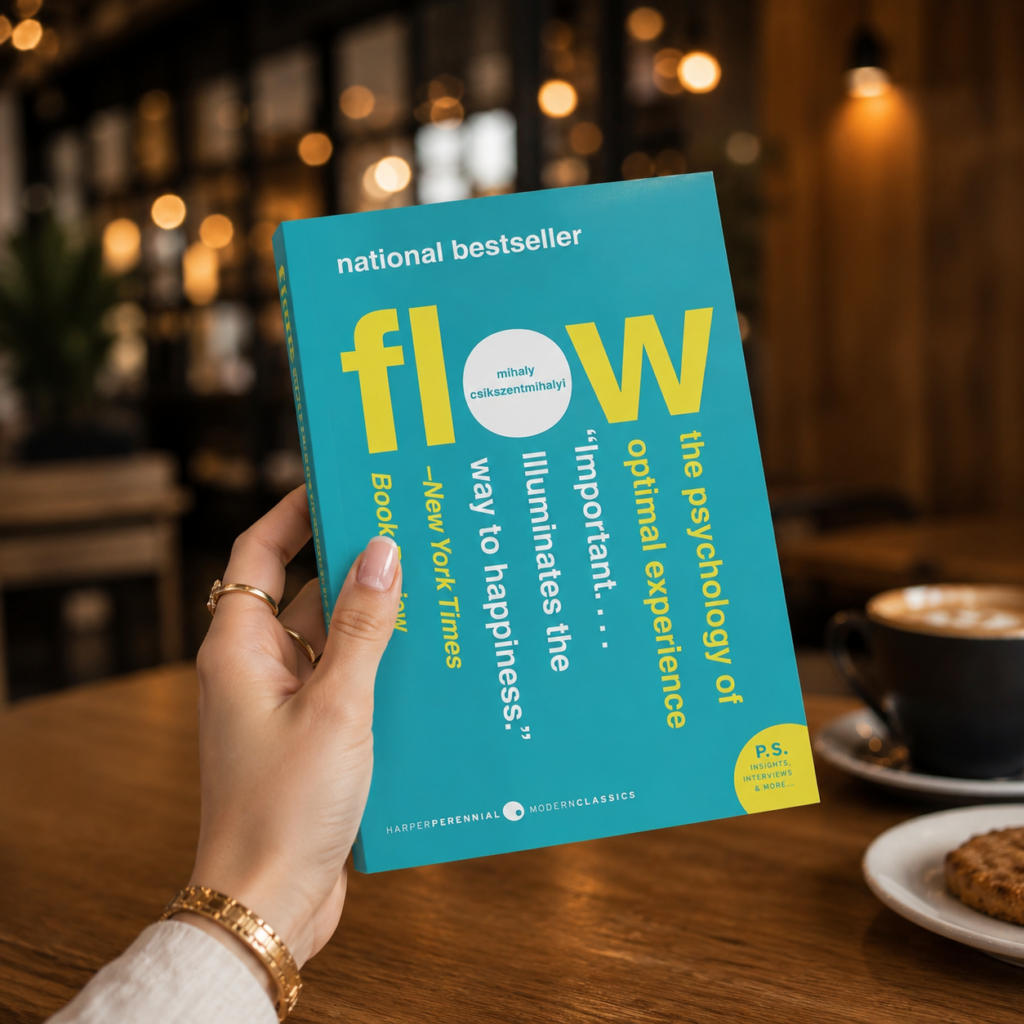
The Core Idea: Flow is the mental state of complete immersion in a challenging but achievable task — where time disappears, self-consciousness fades, and performance peaks. Csikszentmihalyi spent decades researching what conditions trigger flow, and the answer is precise: the task must sit in the sweet spot between your skill level and the challenge level. Too easy = boredom. Too hard = anxiety. Just right = flow.
✅ One Thing To Do TODAY: Identify one task in your work that genuinely stretches your skills without overwhelming you. Clear your environment — close unnecessary tabs, put on headphones with no lyrics, set a 90-minute timer — and attempt to enter flow on that task today. Note how long it takes before your mind wanders.
Why It Made Our List:
This is the most academically dense book on the list — and worth every page. Understanding flow is understanding the neurological engine behind peak performance. For Indian professionals navigating high-pressure roles in tech, finance, or strategy, the ability to engineer flow states is a genuine competitive edge. The concepts around intrinsic motivation are particularly relevant in a culture where external validation (promotions, titles, salaries) dominates career thinking.
⚠️ Who Should Skip It: If you want a quick, practical read with to-do lists, this is not the book. Flow is a research-heavy, philosophical work. Read it slowly, ideally over 2–3 weeks, with a notebook beside you.
BOOK 10 OF 10 — THE COUNTER-INTUITIVE PICK
Four Thousand Weeks: Time Management for Mortals — Oliver Burkeman
Best For: Anyone who has read every productivity book, implemented every system, and still feels like they are losing the race against time.
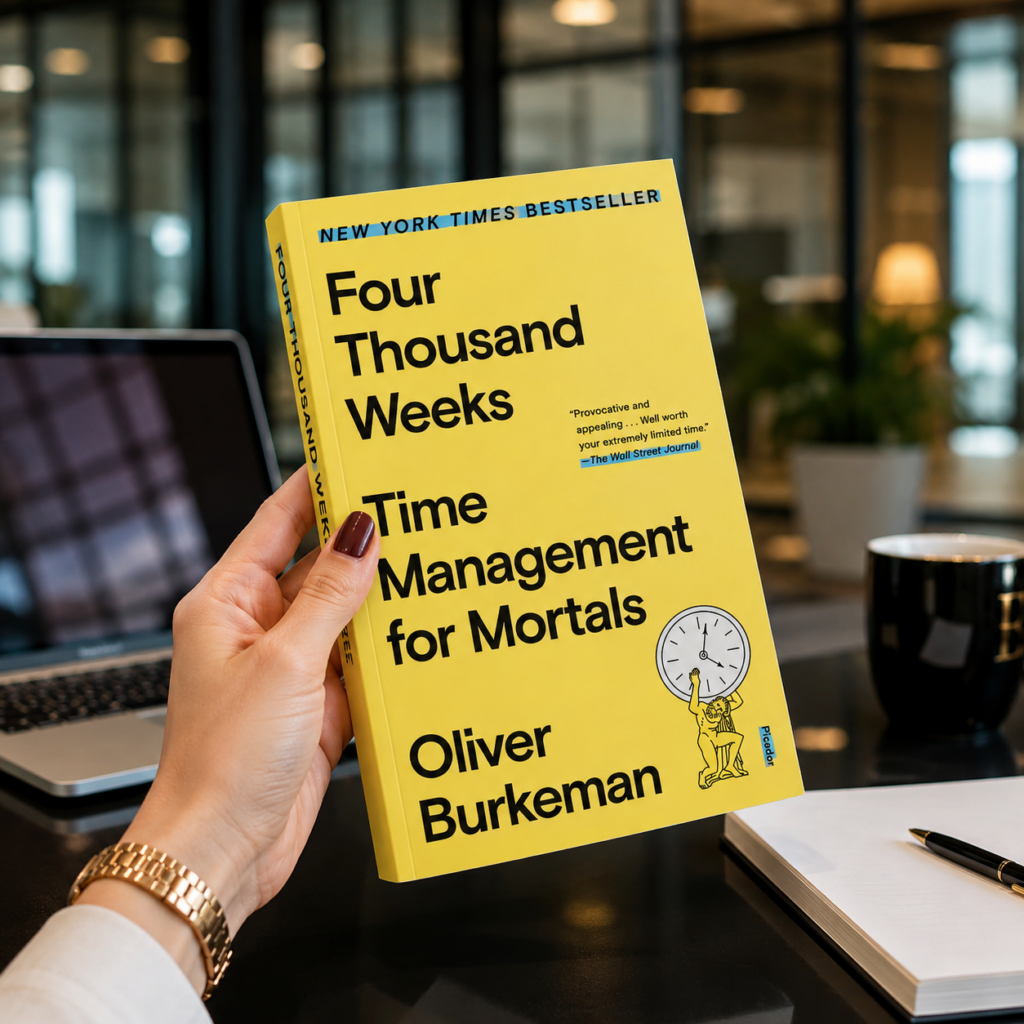
The Core Idea: The average human lifespan is roughly 4,000 weeks. Burkeman’s radical and deeply uncomfortable argument is this: you will never get on top of your inbox, your task list, or your ambitions — and that is not a problem to be solved. It is the human condition to be accepted. Real productivity begins not with a better system but with a reckoning about your finitude and what truly deserves your limited time on earth.
✅ One Thing To Do TODAY: Write down five things you have been putting off until “when I have more time.” Ask yourself honestly: if you knew you only had 10 more years of working life, would these still be on your list? Keep what passes. Let go of what does not.
Why It Made Our List:
This book earns its place on this list precisely because it challenges everything else on this list. Every other book optimises your time. This one questions why you are optimising it and whether the framing is even correct. It is the antidote to toxic productivity culture — a concept younger Indian professionals are increasingly grappling with as hustle culture collides with mental health awareness. It will make you uncomfortable. Read it anyway.
⚠️ Who Should Skip It: If you are in a foundational phase of your career — building basic skills, establishing routines, learning your industry — save this for later. It is most impactful for professionals who have achieved a degree of external success and are starting to question whether they are chasing the right things.
Your Personalised Reading Order Guide
Do not read these in order just because they are numbered. Read them in the order that solves your most urgent problem first. Here is your cheat sheet.
| Your Current Challenge | Start With | Then Read |
|---|---|---|
| I struggle with focus and distraction | Deep Work (#2) | Make Time (#5), then Flow (#9) |
| I feel overwhelmed by too many tasks | The ONE Thing (#3) | Essentialism (#4), then GTD (#6) |
| I procrastinate on important work | Eat That Frog (#7) | Atomic Habits (#1), then 12 Week Year (#8) |
| I can’t seem to build consistent habits | Atomic Habits (#1) | Make Time (#5), then GTD (#6) |
| I set goals but never follow through | The 12 Week Year (#8) | The ONE Thing (#3), then Atomic Habits (#1) |
| I’m burning out and questioning why I work so hard | Four Thousand Weeks (#10) | Essentialism (#4), then Flow (#9) |
| I want a complete productivity system from scratch | GTD (#6) | Atomic Habits (#1), then 12 Week Year (#8) |
Two Suggested Reading Tracks
🟢 Beginner Track (If you are new to productivity books)
Start with Atomic Habits → Make Time → Eat That Frog. These three together form a complete entry-level system: habit formation, daily structure, and priority execution. Read one per month for the next quarter.
🔵 Advanced Track (If you already have a system but want to go deeper)
Go straight to Deep Work → GTD → Flow → Four Thousand Weeks. This sequence moves you from tactical execution to mastery-level performance to philosophical clarity about why you work the way you do.
How to Actually Apply What You Read (The Implementation Gap)
Here is the uncomfortable truth: reading this article will change nothing. Reading all 10 books will also change nothing — unless you close the implementation gap.
The implementation gap is the distance between knowing and doing. Most people are stuck there. Here is how to bridge it.
1. The 24-Hour Rule
Implement one thing within 24 hours of finishing a book. Not “sometime this week.” Within 24 hours. This is not about perfection — it is about momentum. The act of doing anything based on what you read tells your brain that this information matters. It starts the habit of action before the motivation fades.
2. The Action Note System
Keep a dedicated notebook — physical or digital — for your reading. For every book you read, you are only allowed to write one page of notes. But on that one page, the last item must always be: “The one thing I will do differently because of this book is ___.” Fill in that blank before you close the book.
3. The 15-Minute Daily Method
You do not need to read a book in a weekend. Reading 15 minutes a day consistently beats a frantic weekend binge every time. At 15 minutes per day, you will finish the average productivity book in 10–14 days. More importantly, daily reading allows ideas to settle and connect with your actual work in real time — which is when insight actually happens.
4. Avoid “Shelf Help”
Shelf help is the phenomenon of buying a book, feeling productive for purchasing it, and placing it on your shelf where it quietly judges you for the next three years. The cure is simple: do not buy a book unless you are committed to starting it in the next 7 days. If you are not ready to start it, add it to a list and come back when you are.
A final word on this: Every book on this list has been finished by exactly the kind of busy professionals who would tell you they “have no time to read.” The ones who finished them did not have more time. They made different choices about the time they had. That is the whole game.
Frequently Asked Questions
What is the best productivity book for professionals in 2026?
The single best productivity book for professionals in 2026 is Atomic Habits by James Clear — if you are starting from scratch. It is the most research-backed, practically applicable, and widely adopted framework for building a productive life through small, compounding improvements. If you already have solid habits, move to Deep Work by Cal Newport for the next level of performance.
Is Atomic Habits worth reading in 2026?
Absolutely. Atomic Habits was published in 2018 and its relevance has only grown. The core principles — identity-based habits, the four-step habit loop, and environment design — are timeless behavioural science. In 2026, with distraction at an all-time high and attention spans shrinking, the book’s strategies are arguably more important than ever. Over 20 million copies sold is not hype. It is a signal.
How many productivity books should I read in a year?
Quality over quantity. Reading and deeply implementing 3–4 books per year will change your life far more than skimming 20. We recommend one book per month from this list, with genuine implementation before moving to the next. Resist the urge to collect books. Focus on acting on them.
Which productivity book is best for Indian professionals specifically?
The ONE Thing and Deep Work are particularly relevant for Indian professionals because they address the two most persistent challenges in Indian work culture: scattered attention across too many priorities, and the cultural difficulty of saying no to colleagues, managers, and family demands. Essentialism is a close third for the same reasons.
Final Thoughts:
Ten books. One commitment. That is all this takes.
You do not need to read all ten this year. You do not need to become a different person overnight. But you do need to start — because the professionals who consistently invest in learning how to work better compound those gains over a career the same way money compounds in a good investment.
The person who reads Atomic Habits this month and acts on even one idea is not the same person they were at the start of the month. Multiply that by ten books over the next two years, and you have someone who thinks, focuses, executes, and prioritises fundamentally differently from their peers.
That is not an exaggeration. That is exactly how it works.
Pick one book from this list. Order it today. Start it within the week. And come back and tell us what happened.